When you travel to a coastal paradise, the highlights aren’t just the landscapes but also the flavors on your plate. A typical Ha Long Bay restaurant menu is a vibrant map of the Gulf of Tonkin’s biodiversity, offering everything from humble street food to world-class premium seafood. In 2026, the dining scene in Ha Long has evolved, blending traditional Vietnamese recipes with modern international standards to satisfy every palate.
1. What to Expect from a Ha Long Bay Restaurant Menu?
If you are looking at a Ha Long Bay restaurant menu for the first time, you will notice a strong emphasis on “Ocean-to-Table” freshness. Unlike inland cities, most reputable restaurants here feature live seafood tanks where you can pick your meal before it’s cooked.
- Freshness is King: The menu is often dictated by the daily catch. If a particular shellfish isn’t in season, a good restaurant will simply strike it off for the day.
- Flavor Profile: The local style focuses on enhancing—not masking—the natural sweetness of the seafood. Expect plenty of ginger, lemongrass, garlic, and the famous Cat Hai fish sauce.
- Cultural Fusion: While traditional steamed and grilled dishes dominate, 2026 menus now frequently include fusion options like “Salted Egg Yolk Stir-fry” or “Cheese Baked Lobster” to cater to global tastes.
2. The “Must-Try” Signature Dishes (The Heart of the Menu)
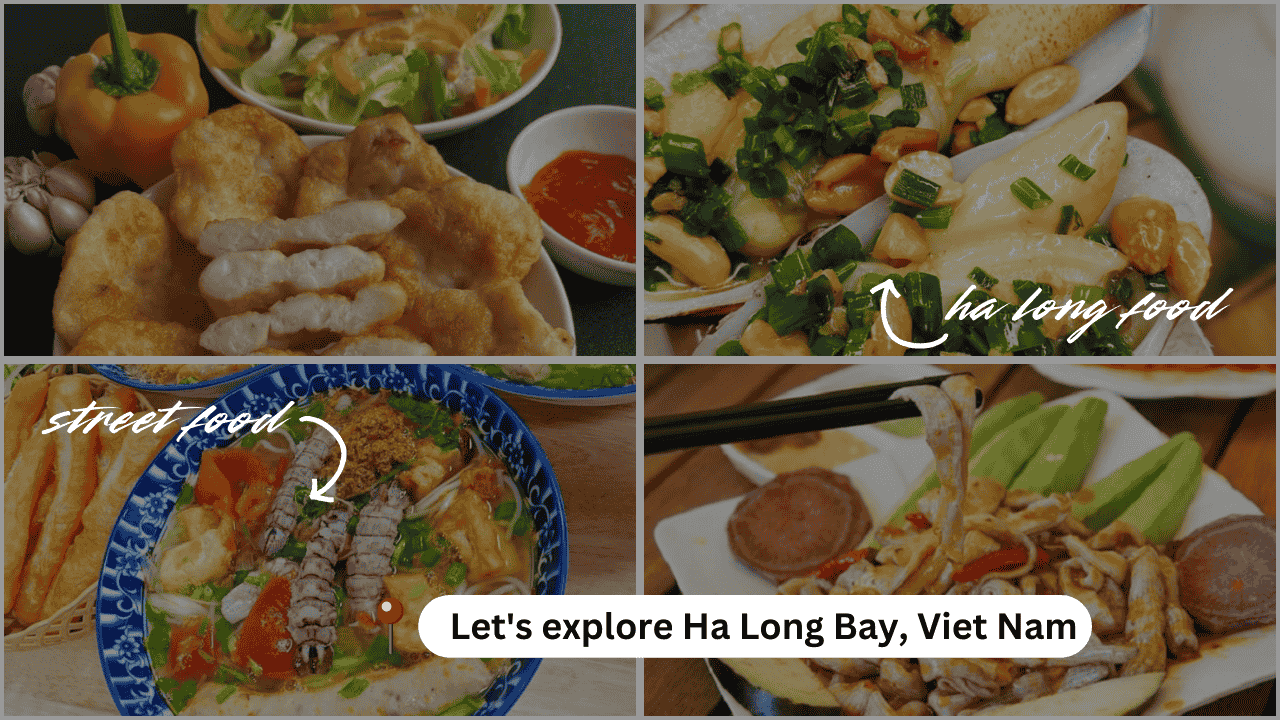
To eat like a local, look for these specific keywords when scanning any Ha Long Bay restaurant menu. These are the legendary dishes that define the region’s culinary identity:
Chả Mực (Grilled Squid Pork)
The undisputed king of Ha Long cuisine. Authentic Chả Mực is hand-pounded to create a perfectly chewy texture. It is usually served with sticky rice (Xôi) or steamed rice rolls (Bánh Cuốn).
- On the Menu: Look for “Hand-pounded Squid Cake”.
Sá Sùng (Sipunculid Worms)
Don’t let the name intimidate you; this is one of the most expensive and delicious items on a premium Ha Long Bay restaurant menu. Historically used as a natural “MSG” for Pho broth, it is now served dried and grilled as a crunchy snack or stir-fried with seasonal vegetables.
- On the Menu: Often listed under “Premium Specialties”.
Tu Hài (Geoduck)
A rare and nutritious mollusk with a crunchy, sweet flesh. The most popular way to enjoy this at a local restaurant is steamed with ginger and green onions or grilled with garlic butter.
- On the Menu: Look for “Steamed Geoduck with Lemongrass”.
Bún Bề Bề (Mantis Shrimp Noodle Soup)
Perfect for breakfast or a light lunch. The broth is simmered from shrimp shells and crabs, topped with peeled mantis shrimp, fried tofu, and fresh herbs.
- On the Menu: Look for “Mantis Shrimp Noodle Soup” in the breakfast or light meal section.
3. Mastering the Menu: Pricing & Ordering Strategies
A Ha Long Bay restaurant menu is more than just a list of dishes; it is a system designed around daily catches. To order like a local and avoid “tourist prices,” you need to understand how the pricing is structured.
At a Glance: Dining Styles & Budget
| Category | Pricing (USD/Pax) | Best For | What’s on the Menu? |
| Set Menu | $20 – $35 | Groups (4+) | Balanced courses: Soup, 3-4 Seafood mains, Rice, Dessert. |
| A La Carte | $30 – $60 | Couples/Foodies | Signature dishes selected individually for premium quality. |
| Live Seafood | Market Price | Special Occasions | Premium items (Lobster, King Crab) picked straight from the tank. |
The “Market Price” Strategy: How to Avoid Surprises
On almost every seafood menu in the bay, you will see items marked as “Market Price”. This is where most international travelers feel confused. Based on common discussions on travel forums like Reddit, here is the protocol:
- Verify the Unit: Always confirm if the price is per 100g or per kg. Some premium items like Abalone or Sea Urchin might be priced per piece.
- Confirm the “Total-In” Cost: In Ha Long, it is common for restaurants to charge a 10-15% processing fee (Phí chế biến) on top of the raw seafood price. Always ask: “Does this price include cooking?”
- The Weighing Ritual: Reputable establishments will weigh the live seafood in front of you. Don’t be shy—take a quick photo of the scale and the total weight to ensure transparency when the bill arrives.
4. Where to Find the Best Menus: 3 Distinct Dining Scenes
You don’t have to stick to just one spot. Ha Long City is divided into different culinary zones, each offering a unique take on the Ha Long Bay restaurant menu.
4.1. The Institutional Favorites (Reliable & Transparent)
If you want a guaranteed high-standard experience with fixed prices, look for the big local brands.
- Hong Hanh Restaurant: Often cited as the “Gold Standard” by locals. Their menu is famous for its consistency. Whether you are at Hong Hanh 3 (Bai Chay) for the sea view or Hong Hanh 1 (Hon Gai) for a local vibe, the Seafood Hotpot and Crispy Squid Cakes are legendary.
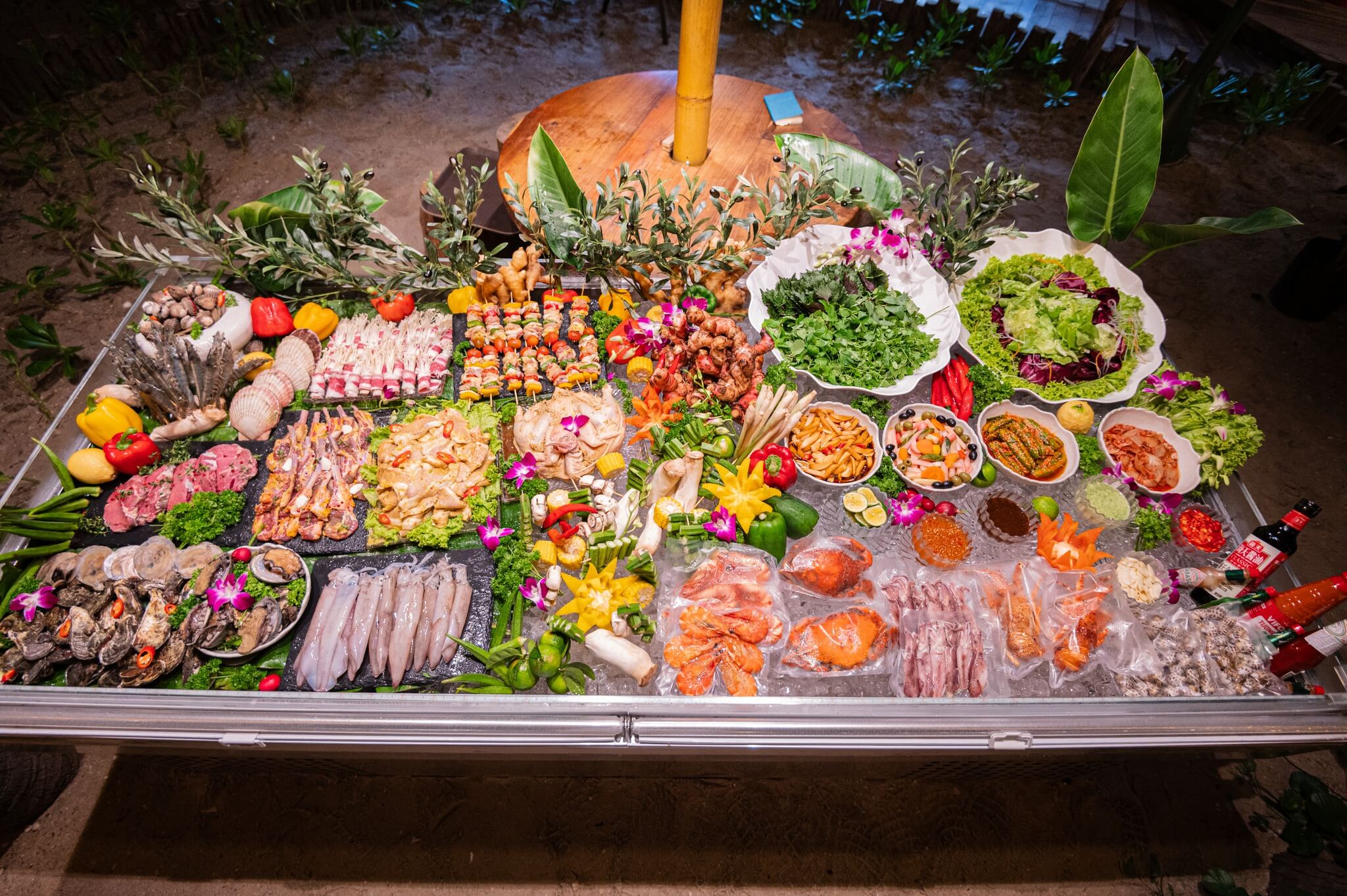
- Ngoc Phuong Nam Seafood: Known for its massive waterfront space. Their menu is extensive, offering a great mix of traditional Vietnamese seafood and modern fusion styles that appeal to international palates.
4.2. The “Foodie Secret”: Cai Dam Market Area
For those who prefer authenticity over white tablecloths, the Cai Dam area in Bai Chay is a must-visit.
- The Experience: This is the hub of family-run restaurants. The menus here are often simpler and focus on the “purity” of the ingredients.
- What to order: This is the best place to find competitive prices for Mantis Shrimp (Bề Bề) and Geoduck (Tu Hài). The Reddit community often recommends this area for travelers who want to escape the “commercial” feel of the main tourist strips.
4.3. The Waterfront & Floating Rafts (Hon Gai Side)
Crossing the bridge to the Hon Gai side (Column 5 to Column 8 area) opens up a different atmosphere.
- Waterfront Dining: Here, you’ll find upscale restaurants lining the coast. The menus focus heavily on local specialties like Sipunculid Worms (Sá Sùng) and various species of ocean snails.
- Floating Restaurants (Nhà Bè): For a raw, sea-to-table vibe, nothing beats a floating raft. The menu is usually limited to what is kept in the cages beneath the raft, ensuring the freshest meal possible while you enjoy the breeze.
5. Special Dietary Needs: Navigating the Menu for Vegetarians & Allergy Sufferers
While a Ha Long Bay restaurant menu is traditionally heavy on shellfish and fish sauce, the dining scene in 2026 is much more inclusive. You don’t have to settle for just white rice if you have dietary restrictions.
Vegetarian & Vegan Options
Most high-quality seafood restaurants now include a dedicated “Món Chay” section. Even if it’s not listed, the chefs are usually happy to prepare dishes upon request.
- Must-try Vegetarian Staples: Look for Rau muống xào tỏi (Stir-fried morning glory with garlic), Đậu phụ tẩm hành (Fried tofu with scallion oil), or Lẩu nấm (Mushroom hotpot).
- Expert Tip: Many “vegetarian” dishes in local spots might still use fish sauce (nước mắm) for seasoning. Always specify “Không nước mắm” (No fish sauce) and “Ăn chay” to ensure your meal is 100% plant-based.
Managing Seafood Allergies
If you are allergic to shellfish but traveling with seafood lovers, don’t worry. The “Inland” section of the menu is your friend.
- Alternative Proteins: Look for Bò Lúc Lắc (Shaking Beef), grilled chicken with lime leaves, or crispy pork ribs.
- Cross-contamination: In busy seafood hubs, kitchens often use the same woks. If your allergy is severe, we recommend dining at larger, established restaurants like Hong Hanh or Phuong Nam, where kitchens are better equipped to handle separate preparation requests.
- The “Allergy Card”: Since English proficiency varies, carry a small card or a phone screenshot in Vietnamese saying: “I am allergic to shellfish. Please check carefully”.
6. Ha Long Bay Dining FAQ: What Travelers Really Want to Know
To wrap up your culinary journey, here are the most frequent questions from the community regarding the Ha Long Bay restaurant menu and dining etiquette.
- Is it customary to tip at restaurants in Ha Long?
Tipping is not mandatory in Vietnam, but it is highly appreciated. For a standard meal, rounding up the bill or leaving $2 – $5 (50,000 – 100,000 VND) for the staff is a kind gesture for good service.
- Can I bring my own wine or spirits to the restaurant?
Yes, most restaurants allow this, but they will charge a “Corkage Fee” (Phí phục vụ rượu). This fee can range from $10 to $30 depending on the prestige of the venue. It’s always cheaper to check the restaurant’s own wine list first.
- What is the “best” time to get the freshest seafood?
For the most diverse Ha Long Bay restaurant menu, dinner is peak time. Seafood is typically delivered to restaurants in the late afternoon. However, for breakfast, don’t miss the local noodle shops (like Mantis Shrimp Noodles) which use the early morning catch.
- Why is the “Market Price” so different from the price at the local fish market?
When you eat at a restaurant, the “Market Price” includes the cost of live-tank maintenance (oxygen and salt water), professional cleaning, cooking styles, service, and the view. You are paying for the convenience and the chef’s expertise.
- Do I need to make a reservation?
For popular spots like Hong Hanh or waterfront venues in Bai Chay, YES. During weekends or the summer peak season (June – August), these places can have wait times of over an hour if you don’t book by 4:00 PM.
Ready to Taste the Authentic Flavors of Ha Long?
Finding the perfect Ha Long Bay restaurant menu shouldn’t be a stressful task. Whether you’re looking for a romantic seafood dinner with a sunset view or a local spot that won’t break the bank, we have the “insider” list ready for you.
Contact us for a personalized restaurant recommendation or table booking to Ha Long Bay:
- Contact us via WhatsApp: 0918686665
- Email: zaviratravel88@gmail.com
Let Zavira Travel turn your meal into a highlight of your trip!